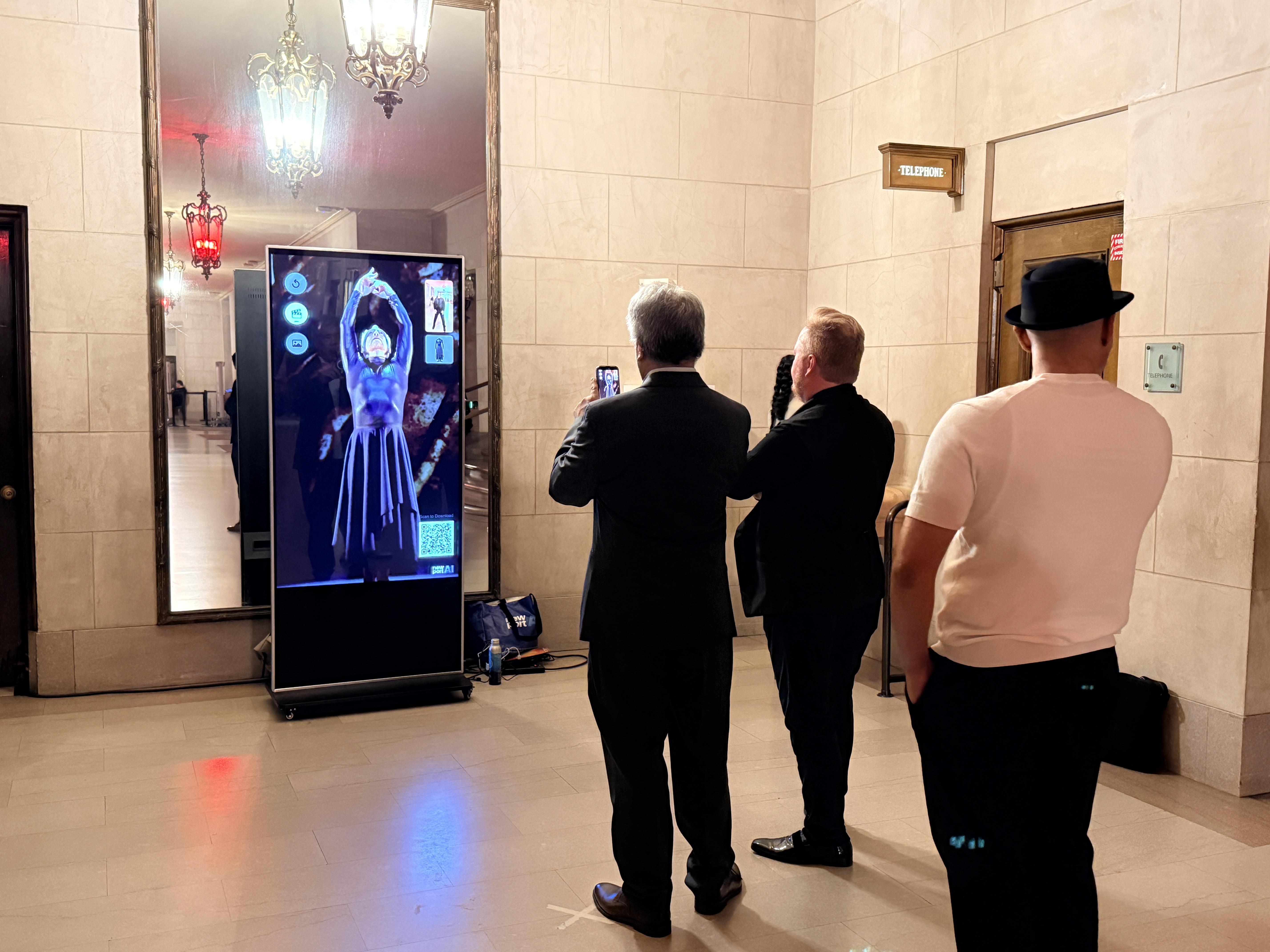
AI Virtual Try-On for BoutiquesFor boutique fashion retailers, the in-store experience plays a major role in how customers discover styles, compare options, and make purchase decisions.This is especially true for occasion wear and formal dresses. Customers often want to explore multiple looks, but traditional fitting rooms can slow down the process. During busy shopping hours or promotional events, physical try-on can create friction for both shoppers and staff.At B Chic Fashion Boutique’s Spring Fling event in San Carlos, New Port AI introduced an AI virtual try-on experience through its AI fitting mirror. The goal was to help customers explore more dresses, stay engaged longer, and move more confidently toward purchase decisions.The Challenge: Making Boutique Shopping More InteractiveBoutique shoppers usually want a personal, visual, and memorable shopping experience. But physical try-on comes with limits.Customers may hesitate to try too many dresses because changing takes time. Fitting rooms can become bottlenecks during events. Staff may also struggle to support every shopper when foot traffic increases.For boutique retailers, this creates a practical challenge:How can a store help customers explore more styles without making the shopping experience feel slower or more complicated?B Chic wanted to create a more engaging in-store experience during its Spring Fling event while still supporting real purchase intent.The Solution: An AI Fitting Mirror for In-Store Virtual Try-OnNew Port AI’s AI fitting mirror gave guests a faster way to preview different looks before physically trying them on.Instead of relying only on fitting rooms, customers could use the mirror to instantly see themselves in selected dresses. This allowed them to compare styles, explore more options, and narrow down preferences more quickly.The experience did not replace traditional shopping. It added a new decision-making layer between browsing and buying.Customers could:Preview multiple dresses instantlyCompare different styles without changing clothesVisualize themselves in occasion-ready looksRecord personalized try-on resultsDecide which dresses were worth trying or purchasingFor boutique retail, this matters because the mirror turns passive browsing into active participation.Event Background: B Chic Spring FlingB Chic Fashion Boutique hosted its Spring Fling event at its San Carlos store. The event combined a promotional campaign, fashion showcase, and in-store shopping experience.The event included:Special limited-time pricingA live runway showHosting by Miss California TeenCollaboration with a San Francisco-based fashion PR companyAn AI fitting mirror booth powered by New Port AIThe goal was straightforward: increase customer engagement and encourage purchasing during the event.Implementation: 23 Dresses Available for AI Virtual Try-OnTo support the activation, B Chic selected 23 evening dresses from its most popular styles and made them available through New Port AI’s fitting mirror.A dedicated booth was set up inside the store so guests could interact with the experience freely. Shoppers could walk up, choose a dress, and see themselves wearing it on the screen.The setup included:23 curated evening dressesInstant AI virtual try-onA dedicated in-store boothPersonalized video generationAspirational visual settings, including vacation and formal event scenesThis made the experience feel more immersive than a standard product display. Customers were not only seeing a dress on a hanger. They were seeing themselves inside a styled moment.Customer Experience FlowThe experience was designed to be simple and easy to understand.Guests arrived at the Spring Fling event.They explored the boutique and runway showcase.They encountered the AI fitting mirror booth.They selected different dresses for virtual try-on.They viewed and recorded their results.Some customers moved directly toward purchase decisions.The strength of the experience was its low barrier to entry. Guests did not need technical knowledge or a long explanation. The interaction was visual, fast, and intuitive.Results: Higher Engagement and Faster Purchase DecisionsOut of approximately 50 event attendees, 20 guests used the AI fitting mirror. Each user tried an average of three styles.Several important behaviors were observed:Guests lined up to use the mirrorMany users tried multiple dress variationsThe booth became a visible interaction point inside the storeCustomers captured and shared generated videosSome customers made purchase decisions after using virtual try-onMost importantly, store staff reported that some shoppers decided to purchase after using the AI fitting mirror without entering a fitting room.That does not mean every interaction led to a sale. But it does show that AI virtual try-on can influence how customers evaluate products and make decisions in a boutique retail environment.Why AI Virtual Try-On Works for BoutiquesAI virtual try-on is especially useful for boutiques because it solves several real in-store problems.1. It Helps Customers Explore More StylesCustomers can quickly preview multiple dresses without the effort of changing clothes. This increases exposure to inventory and encourages shoppers to consider styles they may not have picked from the rack.2. It Reduces Decision FrictionVirtual try-on helps customers narrow down their preferences faster. Instead of guessing whether a style might work, shoppers can visualize it immediately.3. It Creates a Stronger In-Store ExperienceThe mirror gives shoppers a reason to stop, interact, and participate. During events, this kind of experience can become a natural gathering point.4. It Connects Inspiration to PurchaseBy combining try-on with personalized video generation and styled environments, customers can imagine when and where they would wear a dress. This makes the shopping experience more emotional and specific.How Retailers Can Use AI Virtual Try-OnBoutique retailers can use AI virtual try-on in several ways depending on their goals.For short-term campaigns, an AI fitting mirror can be used as an event activation during promotions, fashion shows, product launches, or seasonal shopping events.For daily store operations, the mirror can act as a permanent interactive display that helps customers browse more inventory and reduce fitting room pressure.For online retail, the same concept can be extended into web-based virtual try-on, allowing customers to preview products before visiting the store or making a purchase.For social media, generated try-on videos can become shareable content that extends the reach of the in-store experience.AI Virtual Try-On as a Retail Engagement ToolThe B Chic Spring Fling event shows that AI virtual try-on is more than a novelty.When used correctly, it can support real retail goals:More product explorationHigher customer engagementFaster style comparisonStronger in-store interactionMore confident purchase decisionsMore shareable customer contentFor boutiques, the value is not just the technology itself. The value is helping shoppers move from curiosity to confidence.B Chic’s Spring Fling event demonstrated how AI virtual try-on can become part of the boutique shopping experience.With New Port AI’s AI fitting mirror, guests were able to explore 23 dresses, try multiple looks virtually, generate personalized content, and make faster purchase decisions.For boutique retailers, this kind of solution creates a more engaging and efficient path from product discovery to purchase.Bring AI Virtual Try-On to Your StoreNew Port AI helps boutiques, fashion retailers, and event organizers create interactive virtual try-on experiences for in-store activations, retail events, and online shopping.Contact New Port AI to explore an AI fitting mirror solution for your retail space.
AI Virtual Try-On for Boutiques
See how B Chic used New Port AI’s AI fitting mirror to increase boutique engagement, showcase 23 dresses, and support faster purchase decisions.

B Chic FashionRetail
Related Use Cases


Ready to create your own success story?
Newport AI helps teams scale production, localization, and experimentation without multiplying studio overhead.